Workflow and Storage That Match How You Cook
Kitchen Remodeling in Brooklyn for outdated kitchens requiring layout improvements and functional upgrades
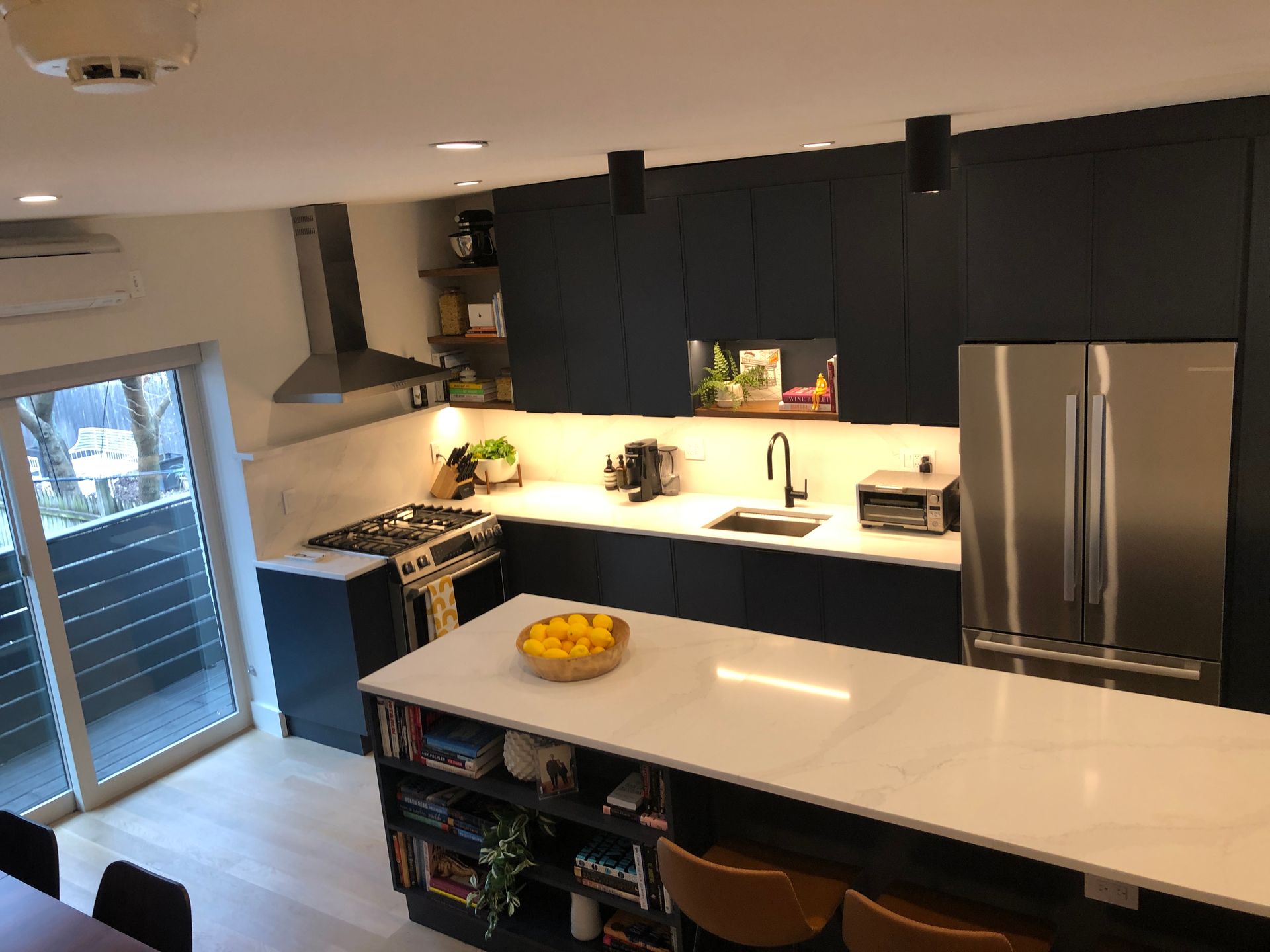
Kitchens with poor workflow, insufficient storage, and worn finishes create daily frustrations that affect how you prepare meals and use the space. NYC Restoration & Construction completes custom kitchen renovations across Brooklyn, Manhattan, Queens, The Bronx, Staten Island, and Westchester, redesigning layouts to improve traffic flow and maximize storage while installing durable materials suited for daily use. You receive a kitchen designed around how you actually cook rather than generic layouts that ignore specific needs like appliance placement, counter workspace, or storage for specialty equipment.
Kitchen remodeling addresses the underlying problem of inefficient triangles between sink, stove, and refrigerator that force unnecessary movement, inadequate counter space adjacent to cooking surfaces, and base cabinets with deep shelves where items disappear in back corners. The work involves removing old cabinets and countertops, updating plumbing and electrical to serve new appliance locations, then installing cabinetry designed to fit your specific storage needs and new countertops selected for both durability and appearance. In Brooklyn homes with galley kitchens or small footprints common in pre-war buildings, layout efficiency becomes critical since total square footage can't expand, making every inch of storage and counter space valuable.
Request a kitchen consultation to discuss layout options, material selections, and storage solutions for your specific cooking style and space constraints.
What Proper Layout and Material Selection Require
Kitchen renovation requires coordinating cabinet dimensions with appliance specifications before ordering, since modern appliances have specific rough-in requirements for water, gas, and electrical connections that affect cabinet sizing. Countertop material affects both appearance and maintenance, with granite and quartz offering durability and stain resistance while requiring professional installation, and laminate providing budget-friendly options with easier DIY replacement if damaged later. Cabinet construction quality determines longevity, with dovetail drawer boxes and plywood cabinet boxes outlasting stapled particle board construction that fails when exposed to moisture from sink and dishwasher use.
After renovation completes, you'll notice that cabinet doors close smoothly without slamming, drawers glide fully open without binding, and soft-close mechanisms prevent wear from impact. Counter space appears where you need it for prep work near the stove and landing areas beside the refrigerator, reducing trips across the kitchen carrying items. Storage becomes accessible with pull-out shelves, drawer organizers, and cabinets sized for specific items rather than generic boxes, and lighting illuminates work surfaces from under-cabinet fixtures rather than casting shadows from overhead ceiling lights alone.
The renovation includes electrical updates to handle modern appliance loads, typically adding dedicated circuits for refrigerator, dishwasher, microwave, and disposal, plus GFCI-protected countertop outlets spaced to minimize visible cords. Plumbing updates may include replacing old galvanized supply lines prone to restriction, installing shut-off valves at each fixture for easier future maintenance, and upgrading drain lines if existing pipes show corrosion. These system improvements happen while walls are open and add minimal cost compared to addressing them later through finished surfaces.
Questions Before Starting Your Project
Homeowners planning kitchen remodels want specific information about material durability, layout options, and how design decisions affect both immediate costs and long-term satisfaction.
What determines cabinet quality and longevity?
Construction method, material choice, and hardware quality all affect durability, with face-frame cabinets offering traditional styling and frameless cabinets maximizing interior space, while soft-close hinges and drawer glides prevent wear from repeated impact over years of use.
How do you maximize storage in small Brooklyn kitchens?
Vertical cabinets extending to ceiling height, corner solutions like lazy susans or pull-out organizers, drawer base cabinets instead of shelved bases, and appliance garages that hide small equipment all increase functional storage without expanding the kitchen footprint.
What countertop material works best for heavy cooking?
Granite and quartz both resist heat and scratching better than laminate, with quartz offering consistent appearance and no sealing requirements, while granite provides natural stone appearance and typically costs less, making the choice dependent on your priorities for maintenance versus budget.
When should you upgrade kitchen electrical service?
If your current panel lacks capacity for added circuits, runs near capacity, or contains outdated breakers, upgrading service during kitchen remodel makes sense since electrical work is already occurring and the incremental cost is lower than scheduling service upgrade separately.
Why do kitchen timelines vary significantly?
Project duration depends on whether layout changes require moving plumbing, whether custom cabinets need fabrication time, and whether structural work like removing walls or adding support beams is involved, with straightforward replacements completing faster than full layout transformations.
NYC Restoration & Construction designs and builds custom kitchens throughout Brooklyn and surrounding boroughs, focusing on functional layouts and durable materials that improve daily usability. Arrange a project review to explore layout options, discuss material selections, and establish a timeline for your kitchen renovation.