Turning Unused Square Footage Into Rooms
Basement and attic conversions in Brooklyn for properties needing home offices, guest rooms, or expanded living areas
Basements with exposed joists and attics used only for storage represent square footage that could function as living space if insulation, ceiling height, and ventilation are addressed. These conversions add rooms without altering the home's footprint, which matters in Brooklyn where lot sizes limit horizontal expansion. After completion, you gain climate-controlled space that matches the rest of the interior rather than a dusty storage zone.
NYC Restoration & Construction handles basement and attic conversions across Brooklyn, Manhattan, Queens, The Bronx, Staten Island, and Westchester. The work includes framing partition walls, adding insulation that meets thermal and sound requirements, installing HVAC extensions so the new space heats and cools properly, and running electrical circuits for lighting and outlets. Ceiling height often determines whether an attic becomes a full bedroom or a low-profile office, and basement moisture levels dictate which flooring materials will last.
Arrange a space evaluation to determine structural modifications needed before finishes are planned.
How Unfinished Spaces Become Functional Rooms
Converting a basement or attic means addressing issues that don't exist in above-grade rooms. Basements need vapor barriers and moisture-resistant framing if concrete walls sweat seasonally, and attics require ventilation that prevents heat buildup while maintaining insulation performance. Floor joists may need reinforcement if the attic wasn't designed for living loads, and basement slabs sometimes need leveling compound before flooring goes down.
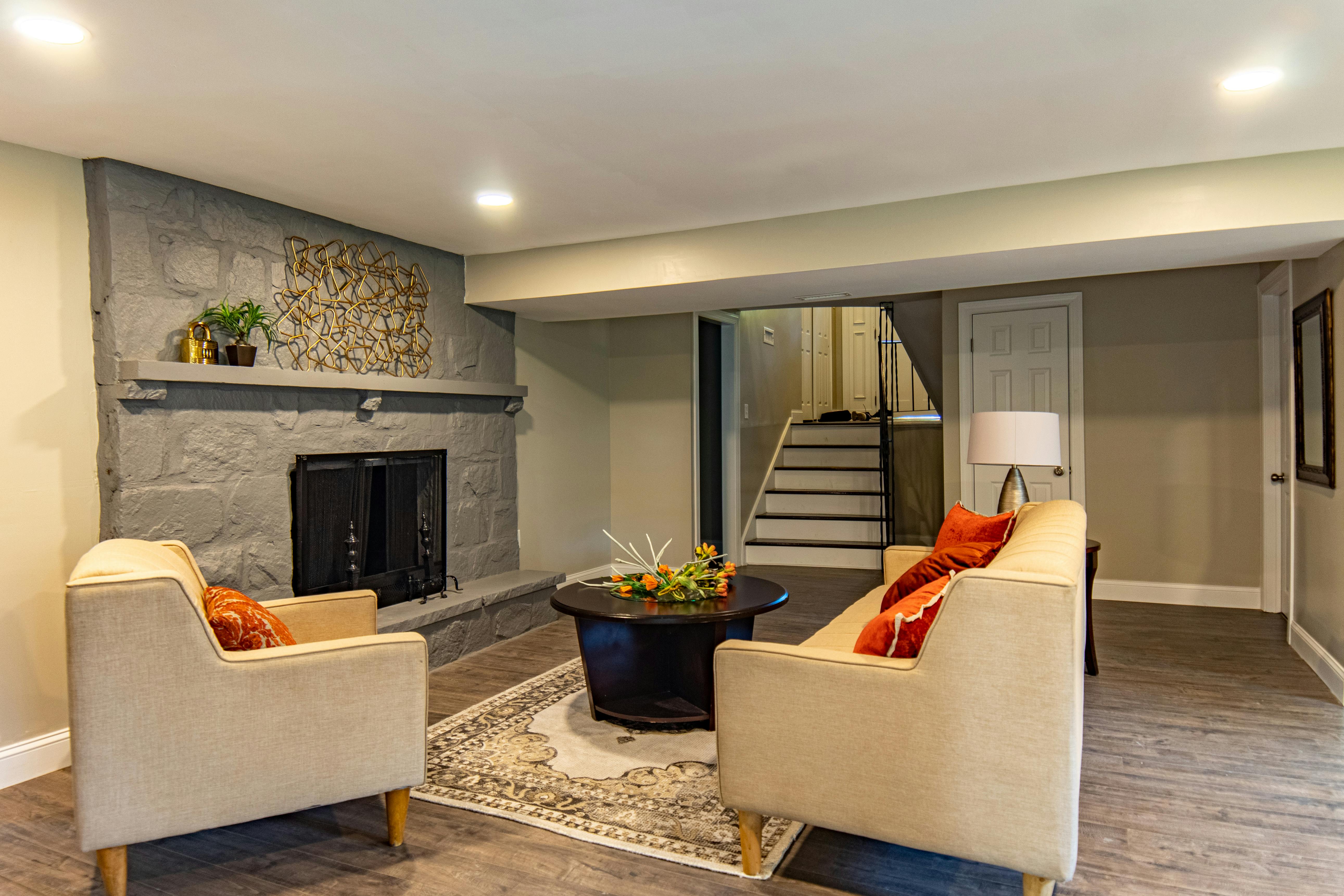
You'll notice that converted basements stay dry without the musty smell unfinished spaces develop, and attics remain comfortable in summer instead of trapping heat. Walls appear finished to the same standard as the rest of the home, and lighting eliminates the dim, shadowy feel typical of unfinished areas. Windows or egress requirements get addressed during framing so the space meets code for its intended use.
The project includes insulation, drywall, flooring, and trim, but doesn't typically cover plumbing for bathrooms unless specified. HVAC extensions tie into existing systems when capacity allows, or require supplemental units if the furnace or air handler can't support additional zones. Electrical panels sometimes need upgrades to handle the increased circuit load.
Common Questions About This Service
Property owners converting basements or attics often ask about structural limits, moisture control, and what the finished space can become.
What limits how an attic can be used after conversion?
Ceiling height and floor joist capacity determine whether the space qualifies as a bedroom under code—most jurisdictions require at least seven feet of clearance and joists rated for living loads, not just storage weight.
How is basement moisture controlled during conversions in Brooklyn?
Interior drainage systems, sump pumps, and vapor barrier paint address groundwater intrusion, while dehumidifiers manage ambient moisture that concrete walls naturally release.
When does a conversion require additional HVAC equipment?
If the existing furnace or air handler operates near capacity, adding square footage that needs heating and cooling requires a supplemental system or a full replacement with higher output.
What flooring works in below-grade basements?
Luxury vinyl, tile, and sealed concrete handle moisture better than hardwood or carpet, which can warp or develop mold when humidity fluctuates.
Why do some attic conversions include dormer additions?
Dormers raise the roofline to create headroom and add windows for natural light, especially in attics with steep pitches that leave limited usable floor area.
NYC Restoration & Construction plans basement and attic conversions around the structural and environmental conditions specific to your property. Contact us to review ceiling heights, moisture levels, and HVAC capacity before finalizing your project scope.