Spaces That Handle Moisture and Daily Use
Bathroom remodeling in Brooklyn for aging fixtures, outdated layouts, and surfaces showing water damage
Older bathrooms accumulate moisture problems that surface finishes alone can't fix. NYC Restoration & Construction handles bathroom remodeling across Brooklyn, addressing everything from compromised grout lines and warped vanities to inefficient layouts that waste usable space. You'll notice the difference in how surfaces resist daily water exposure and how the room functions when the underlying structure is properly prepared.
This work involves removing deteriorated materials down to the subfloor and wall studs when necessary, then rebuilding with moisture-resistant substrates before any tile or fixtures go in. Layout adjustments can open up cramped floor plans, reposition plumbing fixtures for better flow, and add storage where none existed. The service applies to primary bathrooms that see heavy use, guest baths requiring updates, and powder rooms where compact layouts demand careful planning.
Schedule an on-site assessment to identify which structural layers need attention before finishes are selected.
What Proper Preparation Changes in a Bathroom
Bathroom renovations depend on how well the hidden layers resist moisture. Cement board or waterproof membrane systems go behind tile to prevent water from reaching framing, and proper slope in shower pans directs water to drains instead of allowing it to pool. Ventilation gets upgraded to handle steam loads, especially in bathrooms without exterior windows.
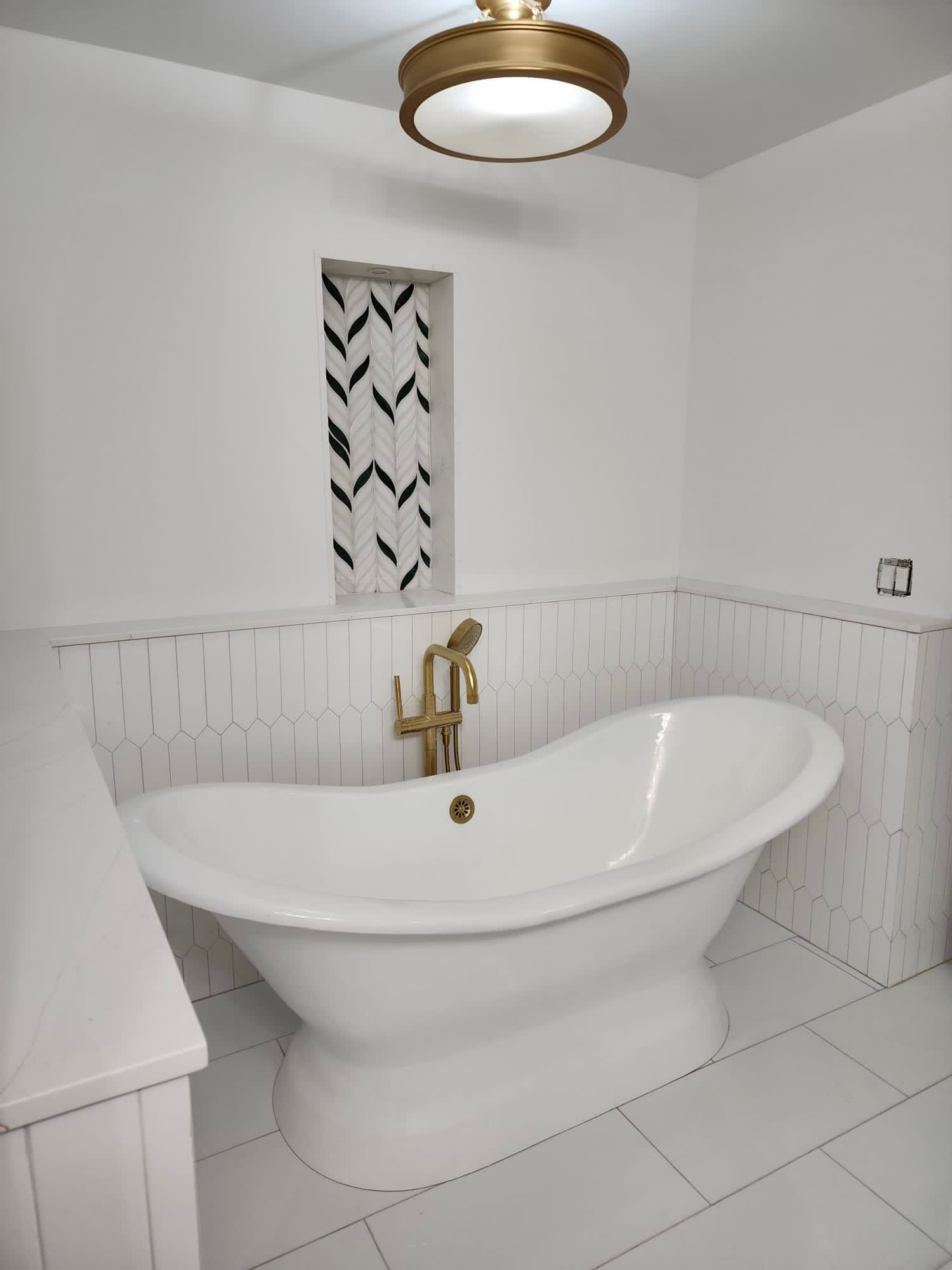
After completion, you'll see grout lines that stay clean longer because water isn't seeping behind tiles, vanities that don't swell at the base, and mirrors that don't fog excessively because airflow has been corrected. Fixtures operate without leaks at connection points, and flooring remains level because the subfloor was addressed during demolition. Lighting improves when older single-bulb fixtures are replaced with layered task and ambient options.
The project scope defines whether plumbing gets rerouted for layout changes or stays in place for fixture upgrades only. Full renovations include new electrical circuits for heated floors or additional outlets, while smaller updates focus on surface replacements and fixture swaps. Each approach depends on how much of the existing structure needs correction versus cosmetic refresh.
Questions Before Starting Your Project
Bathroom projects raise practical concerns about materials, timing, and what the work includes. These answers clarify what to expect during a remodel in Brooklyn.
What determines whether a bathroom needs full demolition or surface updates?
The condition of the subfloor and wall framing dictates scope—soft spots, visible mold, or sagging structures require removal to the studs, while intact surfaces can support new tile and fixtures directly.
How does moisture resistance differ between materials?
Cement board and waterproof membranes create barriers that standard drywall cannot, preventing water from reaching wood framing even when grout eventually cracks or wears.
When should plumbing layout changes be considered?
If the current layout creates bottlenecks, wastes corner space, or places the toilet in an awkward position, rerouting during demolition costs less than attempting changes after finishes are installed.
What affects ventilation requirements in Brooklyn bathrooms?
Buildings with shared vent stacks or bathrooms on interior walls need ducted exhaust fans that meet code, especially when adding steam showers or eliminating windows.
Why do vanity installations vary in complexity?
Wall-mounted vanities require blocking installed between studs during framing, while freestanding units need only level floors—the choice affects both timeline and structural prep work.
NYC Restoration & Construction completes bathroom remodeling with attention to the substrate conditions that determine how long finishes last. Request a project estimate that includes both visible upgrades and underlying moisture control measures.